
- You do not need to give up rice or roti. The type, the portion and what you eat with it matter most.
- Each extra daily serving of white rice was linked with an 11% higher risk of type 2 diabetes in a large review.
- Swapping some white rice for brown rice or other whole grains was linked with a 16–36% lower risk in US studies.
- A simple rule: fill a quarter of your plate with grains, a quarter with protein such as dal, and half with vegetables.
For many families, a meal is not a meal without rice or roti. So after a prediabetes diagnosis, the first worry is often “Do I have to stop eating rice?” No. Carbohydrates are not the enemy, but some carbs raise blood sugar faster than others, and large portions add up quickly. This guide explains how to choose better grains, how much to eat, and how to pair them so your meals stay familiar and your blood sugar stays steadier.
Glycemic index and glycemic load, simply explained
The glycemic index (GI) ranks carb foods by how quickly they raise blood sugar compared with pure glucose. Foods with a GI of 55 or less are called low, 56–69 medium, and 70 or more high. Refined grains that are soft, finely milled or well cooked tend to be digested fast and sit higher on the scale.
The glycemic load (GL) adds portion size to the picture. A large plate of a medium-GI food can raise blood sugar more than a small serving of a high-GI food. That is why portion size matters as much as the type of grain.
The glycemic index scale
Atkinson et al., Am J Clin Nutr 2021 (international GI tables). Values for the same food vary widely by variety, cooking and country.
GI is useful but not the whole story. A large review found fiber and whole grains had clearer links with lower disease risk than GI or GL. So think “more fiber, less refined” first.
White rice: what the evidence shows
White rice has had its bran and germ removed, which strips out most of its fiber, magnesium and B vitamins. A meta-analysis of more than 350,000 people linked higher white rice intake with a higher risk of type 2 diabetes, most strongly in Asian populations, who often eat it several times a day.
Type 2 diabetes risk with the highest vs lowest white rice intake
Hu et al., BMJ 2012 (4 cohort studies, 352,384 people). The Western result was not statistically significant. These are observational links, not proof of cause.
This does not mean one bowl of rice causes diabetes. But big, frequent portions of refined rice are worth trimming.
Better rice choices, and millets
- Brown or red rice keeps the bran, so it has more fiber. In US studies, replacing about a third of a serving of white rice a day with brown rice was linked with a 16% lower diabetes risk, and with whole grains overall, 36% lower.
- Parboiled rice, common in South India, is partly boiled in the husk before milling. It often has a lower GI than raw milled white rice, though values vary.
- Millets such as ragi (finger millet), jowar (sorghum), bajra (pearl millet) and foxtail millet are whole grains with more fiber than white rice. Research is promising but limited, and finely ground flour can still raise blood sugar quickly.
Sun et al., Arch Intern Med 2010 (about 197,000 US adults).
Roti: whole wheat beats maida
Roti made from whole-wheat atta keeps more of the grain’s fiber than naan, paratha or bread made from maida (refined white flour). Chapati made from whole-wheat atta usually has a moderate GI, while white bread and maida naan tend to be high. You can raise fiber further by adding besan (chickpea flour), ragi, jowar or bajra flour to your atta, or by keeping a little of the bran rather than sieving it out.
Watch the extras: ghee on every roti and oily stuffed parathas add many calories. A dry or lightly greased phulka is the everyday choice.
Oats: not all types are equal
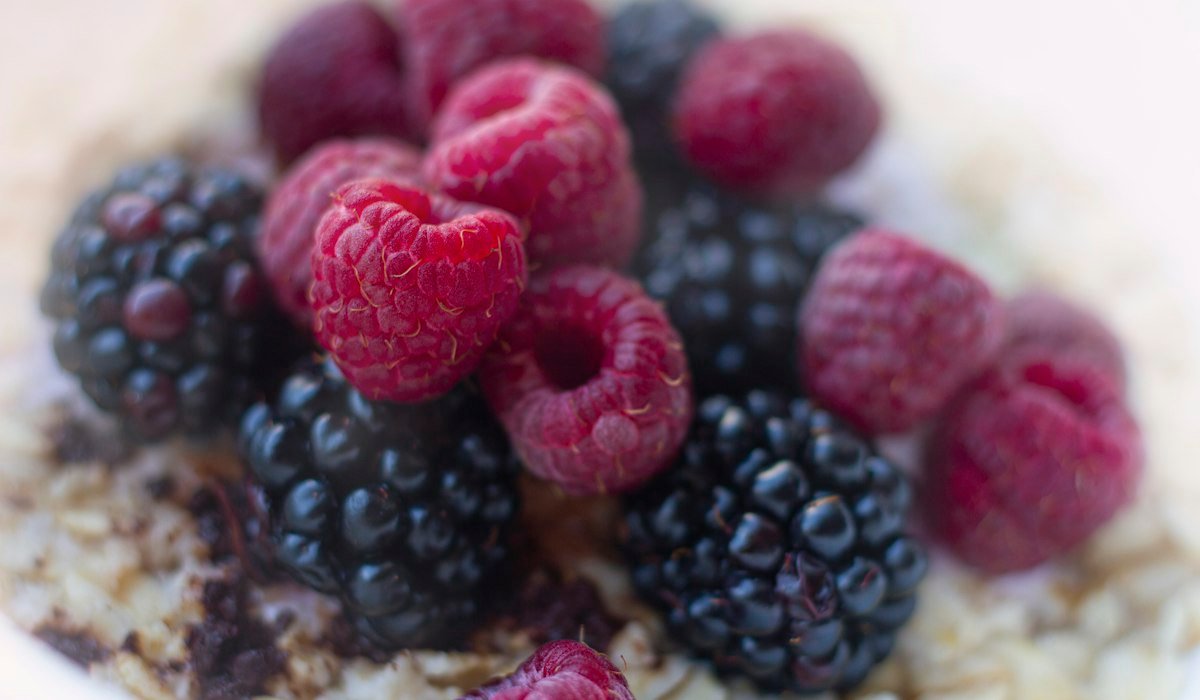
Oats contain beta-glucan, a soluble fiber that forms a gel in the gut. It can slow digestion and helps lower LDL cholesterol, with about 3 g a day (roughly 60–80 g of oats) showing a benefit in trials. But how the oats are processed changes how fast they are digested.
From least to most processed
Typical categories from international GI tables; brands vary.
Add milk, curd, nuts or seeds for protein, or try savory oats upma with vegetables. Find more ideas in Breakfast for Prediabetes.
Does cooling and reheating rice help?
When cooked rice, potatoes or pasta are cooled, some of the starch changes into resistant starch, which behaves more like fiber. Small studies suggest rice cooked, chilled overnight and reheated may raise blood sugar a little less than freshly cooked rice. The effect is modest, though, and much smaller than cutting your portion or adding dal and vegetables. If you do it, refrigerate cooked rice within about an hour and reheat it until piping hot to avoid food poisoning.
How much to eat
There is no single right amount for everyone, but these rough portions fit the quarter-plate rule for most adults at a main meal:
| Carb food | A sensible portion |
|---|---|
| Cooked rice (brown, parboiled or white) | ½–¾ cup (about 100–150 g) |
| Whole-wheat roti or phulka | 1–2 medium |
| Rolled or steel-cut oats | ⅓–½ cup dry (30–40 g) |
| Idli | 2 medium, with sambar |
| Poha or upma | about 1 cup cooked, with vegetables |
| Cooked millet or quinoa | ½–¾ cup |
Approximate guide. Your needs depend on your size, activity and medicines. A dietitian can tailor it.
A cup of cooked rice has roughly 45 g of carbohydrate, and a medium roti about 15 g. To learn how to count, read Carb Counting Made Simple.
Pair your carbs: the plate method
The Diabetes Plate Method, recommended in American Diabetes Association guidance.
Fiber, protein and a little healthy fat slow carb absorption. Eating vegetables and dal before rice or roti may soften the spike further. See Fiber and Protein for Blood Sugar for the details and our Prediabetes Meal Plan for a full week of meals.
Smart swaps
| Instead of | Try | Why it helps |
|---|---|---|
| A heaped plate of white rice | ½ cup rice plus extra dal and sabzi | Lower glycemic load, more fiber and protein |
| Maida naan or white bread | Whole-wheat or multigrain roti | More fiber, slower digestion |
| Flavored instant oats | Plain rolled or steel-cut oats with fruit and nuts | Less added sugar, lower GI |
| Plain poha | Poha with peas, peanuts and curd | Adds protein and fiber |
| “Multigrain” packaged bread | Bread with whole grain listed first | “Multigrain” can still be mostly refined flour |
Reading labels helps here. Our guide to nutrition labels shows what to look for.
Check your fiber. Try our Fiber Calculator to see how close your usual meals get to 25–30 g a day.
Taking diabetes medicines? If you take insulin or tablets such as sulfonylureas, cutting carbs sharply can cause low blood sugar. Talk to your doctor before making big changes.
MythBrown rice and millets are “free foods” you can eat without limit.
FactThey are better choices than refined grains, but they still contain plenty of carbohydrate. Portion size still counts.
Common questions
Is roti better than rice for prediabetes?
Whole-wheat roti usually has more fiber than white rice, so it is often a slightly better choice. But two rotis with dal and sabzi and a modest bowl of rice with the same sides are closer than many people think. Portion and pairing matter more than the choice between them.
Should I go low-carb?
Several eating patterns can work, including lower-carb, Mediterranean-style and traditional Indian diets with smaller grain portions. The best one is the one you can keep up. Read What to Eat with Prediabetes for options.
- You can keep eating rice and roti; choose less refined versions and smaller portions.
- Brown, red or parboiled rice, millets, whole-wheat atta and less processed oats are better everyday choices.
- Fill half your plate with vegetables and a quarter with protein, leaving a quarter for grains.
- Cooling and reheating rice has only a modest effect; portion and pairing matter far more.
- Next: The Complete Prediabetes Guide.
Sources
- Atkinson FS, Brand-Miller JC, Foster-Powell K, Buyken AE, Goletzke J. International tables of glycemic index and glycemic load values 2021: a systematic review. Am J Clin Nutr. 2021;114(5):1625–1632.
- Hu EA, Pan A, Malik V, Sun Q. White rice consumption and risk of type 2 diabetes: meta-analysis and systematic review. BMJ. 2012;344:e1454.
- Sun Q, Spiegelman D, van Dam RM, et al. White rice, brown rice, and risk of type 2 diabetes in US men and women. Arch Intern Med. 2010;170(11):961–969.
- Reynolds A, Mann J, Cummings J, et al. Carbohydrate quality and human health: a series of systematic reviews and meta-analyses. Lancet. 2019;393(10170):434–445.
- Whitehead A, Beck EJ, Tosh S, Wolever TM. Cholesterol-lowering effects of oat β-glucan: a meta-analysis of randomized controlled trials. Am J Clin Nutr. 2014;100(6):1413–1421.
- American Diabetes Association Professional Practice Committee. 5. Facilitating Positive Health Behaviors and Well-being to Improve Health Outcomes: Standards of Care in Diabetes—2026. Diabetes Care. 2026;49(Suppl 1).
This article is for general education and is not a substitute for advice from your own doctor or healthcare team.