
- There is no single “liver detox” food. What helps most is eating a little less overall and choosing better-quality foods.
- Losing 5% of body weight can reduce liver fat; 10% or more can calm inflammation and even improve scarring.
- Major liver guidelines recommend a Mediterranean-style pattern: vegetables, legumes, whole grains, olive oil, nuts and fish.
- Cut back on sugary drinks, refined carbs, fried and ultra-processed foods, and alcohol.
If a scan or blood test has shown fat in your liver, food is one of the most powerful tools you have. Metabolic dysfunction-associated steatotic liver disease (MASLD), the new name for non-alcoholic fatty liver disease, is closely tied to insulin resistance, extra weight around the waist and how we eat. There is no approved medicine that replaces healthy eating, and the good news is that the liver responds well to change. This guide explains what to eat, what to limit and how to put it together on an ordinary day. If you are new to the condition, start with Fatty Liver (MASLD) Explained.
Step one: a modest calorie deficit
The single most important dietary change for fatty liver is eating slightly fewer calories than you burn, so that you slowly lose weight. When the body is in a deficit, the liver is one of the first places it draws fat from. Both the AASLD 2023 practice guidance and the EASL-EASD-EASO 2024 guideline put weight loss at the center of treatment for people living with overweight or obesity.
Rinella et al., Hepatology 2023 (AASLD); EASL-EASD-EASO, J Hepatol 2024; Vilar-Gomez et al., Gastroenterology 2015 (293 adults, 52 weeks of lifestyle change).
A deficit of roughly 500–1,000 calories a day is a common starting point, but the right amount depends on your size, age and activity. Slow and steady weight loss is kinder to the liver than crash dieting. Our Calorie Calculator can give you a rough daily target. People with a normal weight (called “lean MASLD”) also benefit from the food quality changes below, and a smaller amount of weight loss, around 3–5%, may help them.
Why the Mediterranean pattern?
The EASL-EASD-EASO 2024 guideline recommends a Mediterranean-style diet for people with MASLD. This way of eating is built on vegetables, legumes, whole grains, fruit, olive oil, nuts and fish, with little red and processed meat or added sugar. It improves insulin sensitivity and heart health, which matters because heart disease is the most common cause of death in people with fatty liver.
In a small crossover trial, adults with fatty liver ate a Mediterranean diet for six weeks and a low-fat, high-carbohydrate diet for six weeks. Liver fat fell by about 39% on the Mediterranean diet versus about 7% on the low-fat diet, even though weight loss was similar. You do not need to eat Greek food to get the benefit. Dal, sabzi, chana, whole-grain roti and a handful of nuts fit the pattern well.
Build your plate
A simple plate model based on Mediterranean-style guidance; add a drizzle of olive oil, a few nuts or seeds, and water to drink.
Filling half the plate with vegetables lowers calories without leaving you hungry. Protein at every meal helps protect muscle while you lose weight; see The Complete Guide to Protein for amounts.
Foods to favor
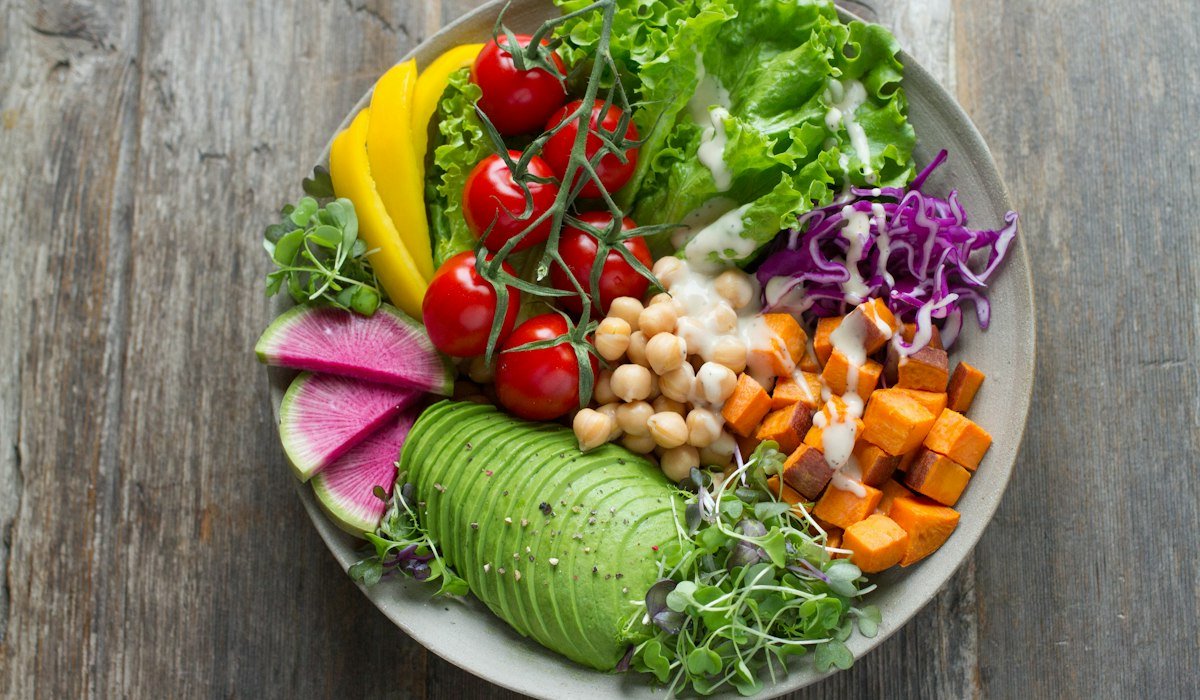
Leafy greens, gourds, beans, okra, cauliflower, tomatoes. Whole fruit in sensible portions.
Dal, rajma, chana, moong, lentil soups and sprouts give protein and fiber together.
Whole-wheat roti, millets such as ragi and jowar, brown rice, oats, whole-grain bread.
Use olive, mustard or groundnut oil in measured amounts. A small handful of almonds or walnuts a day.
Oily fish such as salmon, sardines or mackerel, grilled or in curry, once or twice a week.
Regular coffee drinking is linked with less liver scarring. Keep sugar low. See Coffee, Alcohol and Your Liver.
Higher-fiber diets are also linked with lower rates of type 2 diabetes and heart disease, two conditions that often travel with fatty liver.
What to limit
- Vegetables, sprouts and salads
- Dal, chana, rajma and other legumes
- Whole grains and millets
- Curd, buttermilk, paneer in sensible portions
- Nuts, seeds, olive or mustard oil
- Water, plain tea and coffee
- Sugary drinks: soda, packaged juice, sweetened lassi
- Refined carbs: white bread, maida, large portions of white rice
- Fried snacks: samosa, pakora, chips
- Processed meats and ready meals
- Sweets, biscuits and bakery items
- Alcohol
Sugary drinks deserve special mention because the fructose in them is turned into fat in the liver. Read more in Sugar, Fructose and Fatty Liver. Alcohol adds a second source of liver stress, so most liver specialists advise people with MASLD to cut it right down or avoid it.
Easy swaps
More ideas are in Food Swaps That Lower Blood Sugar, since the same swaps help the liver.
A sample day
This is one example of a Mediterranean-style day with Indian foods. Adjust portions to your calorie needs.
| Meal | What to eat |
|---|---|
| Breakfast | 2 idli or a bowl of vegetable poha, sambar, and a boiled egg or a small bowl of curd; black coffee or tea with little sugar |
| Mid-morning | A guava, orange or apple, and a few almonds |
| Lunch | 2 whole-wheat or millet roti, a large bowl of dal, mixed vegetable sabzi, cucumber and tomato salad |
| Evening | Roasted chana or sprouts chaat; buttermilk |
| Dinner | Grilled fish or paneer tikka with sauteed vegetables, a small portion of brown rice, and a side salad dressed with olive oil |
Not sure how much protein you need while losing weight? Try our Protein Calculator.
Talk to your doctor before big changes if you take insulin or other diabetes medicines (a calorie deficit can lower blood sugar), if you are pregnant, or if you have been told you have cirrhosis. People with advanced liver disease often need more protein and calories, not less, and should follow a plan from their liver team.
MythYou need detox teas, juices or special supplements to clean a fatty liver.
FactNo drink or pill detoxes the liver. Steady weight loss and a better-quality diet are what reduce liver fat, and some herbal products can actually harm the liver.
Common questions
Is a low-carb or low-fat diet better for fatty liver?
Both can reduce liver fat if they help you eat fewer calories. The Mediterranean pattern has the strongest support because it also protects the heart. The best diet is the one you can keep up.
Can I still eat rice?
Yes. Keep portions moderate, choose brown or parboiled rice where you can, and pair it with plenty of dal and vegetables. See our guide to rice, roti and oats.
Should I avoid all fruit because of fructose?
No. Whole fruit comes with fiber and water and is linked with good health. The concern is added sugars and juices, not an apple or a guava.
How soon will my liver improve?
Liver fat can start to fall within weeks of eating less. Changes in inflammation and scarring take many months, so steady habits matter most.
- A modest, steady calorie deficit is the first and most important step.
- Aim for 5% weight loss to reduce liver fat, and 7–10% or more for bigger benefits.
- Follow a Mediterranean-style pattern: vegetables, legumes, whole grains, olive oil, nuts and fish.
- Limit sugary drinks, refined carbs, fried and processed foods, and alcohol.
- Next: Sugar, Fructose and Fatty Liver: What You Need to Know.
Sources
- European Association for the Study of the Liver, European Association for the Study of Diabetes, European Association for the Study of Obesity. EASL–EASD–EASO Clinical Practice Guidelines on the management of metabolic dysfunction-associated steatotic liver disease (MASLD). J Hepatol. 2024;81(3):492–542.
- Rinella ME, Neuschwander-Tetri BA, Siddiqui MS, et al. AASLD Practice Guidance on the clinical assessment and management of nonalcoholic fatty liver disease. Hepatology. 2023;77(5):1797–1835.
- Vilar-Gomez E, Martinez-Perez Y, Calzadilla-Bertot L, et al. Weight loss through lifestyle modification significantly reduces features of nonalcoholic steatohepatitis. Gastroenterology. 2015;149(2):367–378.
- Ryan MC, Itsiopoulos C, Thodis T, et al. The Mediterranean diet improves hepatic steatosis and insulin sensitivity in individuals with non-alcoholic fatty liver disease. J Hepatol. 2013;59(1):138–143.
- Kennedy OJ, Roderick P, Buchanan R, Fallowfield JA, Hayes PC, Parkes J. Systematic review with meta-analysis: coffee consumption and the risk of cirrhosis. Aliment Pharmacol Ther. 2016;43(5):562–574.
- Reynolds A, Mann J, Cummings J, et al. Carbohydrate quality and human health: a series of systematic reviews and meta-analyses. Lancet. 2019;393(10170):434–445.
This article is for general education and is not a substitute for advice from your own doctor or healthcare team.