
- Fruit is not off-limits with prediabetes. Whole fruit is linked with a lower, not higher, risk of type 2 diabetes.
- In three large US cohorts, eating blueberries three times a week was linked with a 26% lower risk, while fruit juice was linked with an 8% higher risk.
- Great everyday picks: berries, guava, apple, pear, orange and papaya.
- Portion sweeter fruits such as mango, banana, grapes and dried fruit, and pair fruit with protein or nuts.
Many people with prediabetes are told, or assume, that fruit is “too sweet” and should be avoided. That advice can backfire. Whole fruit brings fiber, water, vitamin C, potassium and plant compounds, and in large studies people who eat more whole fruit tend to have lower diabetes risk. The key is choosing the form (whole, not juice), watching portions of the sweetest fruits and eating fruit in a way that keeps blood sugar steady.
Whole fruit vs juice: a big difference
Fruit sugar in a whole fruit is packed inside plant cell walls along with fiber. You chew it, it takes longer to eat and it fills you up. Juice removes most of that fiber, so the sugar arrives quickly and in larger amounts. It is easy to drink the sugar of three or four oranges in one glass.
A large analysis of three US cohorts following about 187,000 health professionals for up to 24 years looked at specific fruits and type 2 diabetes. The results were consistent: many whole fruits were linked with lower risk, and juice with higher risk.
Change in type 2 diabetes risk per 3 servings a week
Muraki et al., BMJ 2013 (Nurses’ Health Study I and II and Health Professionals Follow-up Study). Observational: shows links, not proof of cause.
Similar findings come from Asia. In a study of about half a million Chinese adults, people who ate fresh fruit daily had about a 12% lower risk of developing diabetes than those who rarely ate it. A large meta-analysis in the BMJ also linked fruit juice with a higher risk of type 2 diabetes. For more on sugary drinks, see Food Swaps to Lower Blood Sugar.
Why fiber is the secret ingredient
Fiber slows how fast sugar reaches your blood and feeds healthy gut bacteria. Fruits with edible skins and seeds, like guava, pears, apples and berries, tend to have the most. A guava or a pear with its skin can provide around 5 g of fiber, a real contribution toward the 25–30 g most adults need each day. Check yours with our Fiber Calculator, and read Fiber and Protein for Blood Sugar.
Best everyday picks
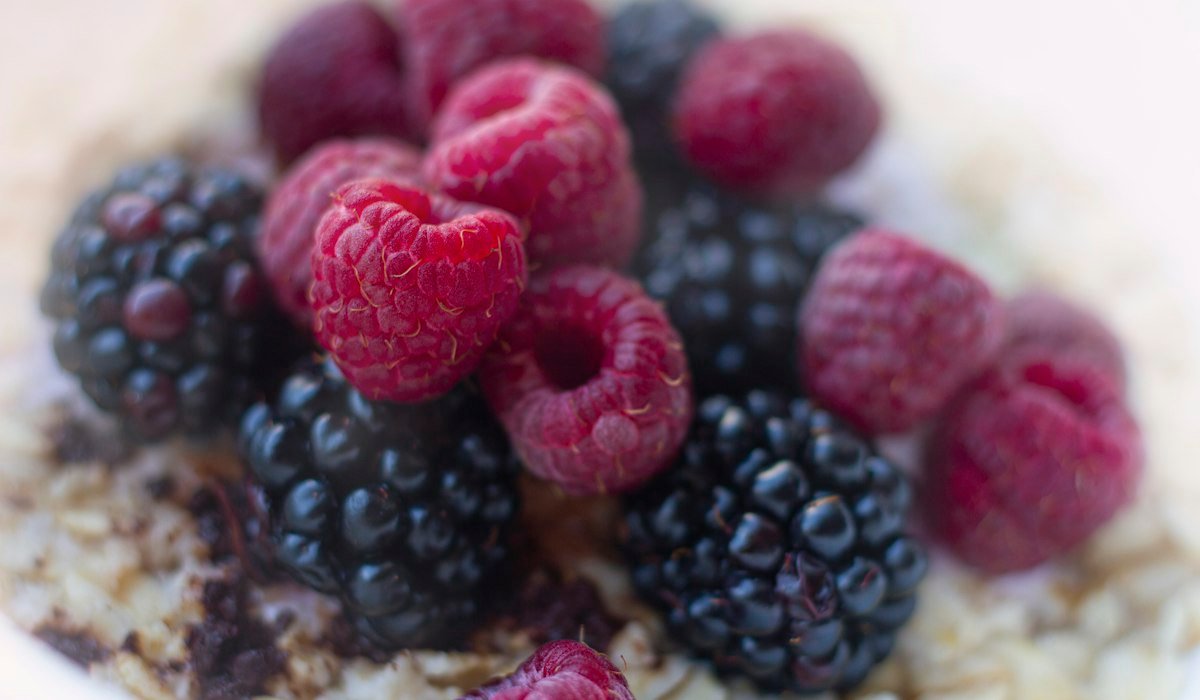
Blueberries, strawberries, raspberries, jamun. Lower in sugar, high in fiber and plant pigments. Fresh or frozen both work.
One of the highest-fiber everyday fruits, rich in vitamin C, affordable across India. Eat with the skin.
Portable, filling and fiber-rich. Keep the skin on and pair with a few nuts.
Eat the segments rather than the juice to keep the fiber and slow the sugar.
Moderate in sugar per bowl, gentle on digestion and a good source of vitamin A and C.
Mango, banana, grapes, chikoo, custard apple and all dried fruit. Enjoy them, but in smaller servings.
Portion guide
A useful rule is about two to three servings of whole fruit a day, spread out rather than eaten all at once. Each serving below contains roughly similar carbohydrate, around 15 g.
| Fruit | One serving is about | Tip |
|---|---|---|
| Berries | 1 cup (about 150 g) strawberries, or 3/4 cup blueberries | Great with yogurt |
| Guava | 1 medium | Sprinkle with chaat masala |
| Apple or pear | 1 small | Keep the skin on |
| Orange | 1 medium | Eat, do not juice |
| Papaya | 1 cup cubes | Add lime juice |
| Mango | About half a cup of slices (a few slices) | After a meal, not with extra sweets |
| Banana | Half a large or one small banana | Slightly less ripe is gentler |
| Grapes | About 15 grapes | Count them out into a bowl |
| Dried fruit | 2 tablespoons raisins or 2–3 dates | Very concentrated sugar |
Fruit counts toward the carbohydrate in a meal. If you learn to recognize portions, it becomes easy to fit fruit into your day. Our Carb Counting Made Simple guide explains more.
What about the glycemic index (GI)? International GI tables show that most whole fruits, including apples, pears, oranges and berries, fall in the low to medium range. Riper fruit, such as a very ripe banana, tends to raise blood sugar more than a firmer one. GI is a helpful guide, but the portion you eat and what you eat it with usually matter more than the number on a list.
How to eat fruit for steadier blood sugar
Pairing fruit with protein or fat, such as yogurt, nuts, peanut butter or cheese, slows digestion. Eating fruit as part of a meal or after a walk also tends to give a smaller rise than eating a big portion on an empty stomach.
Test it yourself. If you have a glucose meter, check your blood sugar two hours after eating a fruit you love. Responses vary between people, and this helps you find a portion that suits you.
If you take insulin or medicines that can cause low blood sugar, or have kidney disease that limits potassium, ask your doctor or dietitian which fruits and portions suit you.
MythPeople with prediabetes should avoid mango and banana completely.
FactThey can fit in smaller portions, ideally with a meal or with nuts or curd. The amount and the pairing matter more than the fruit itself.
Common questions
Is fruit sugar worse than other sugar?
The sugar in whole fruit comes with fiber and water, which slow it down. Added sugar in sweets, drinks and juice does not, which is why it is the main one to limit.
Are smoothies as good as whole fruit?
Blending keeps the fiber but makes fruit easier to consume in larger amounts. Keep fruit to one serving and add yogurt, seeds or vegetables.
What is the best time to eat fruit?
There is no single best time. Many people do well eating fruit with or after a meal, or as a snack paired with protein, rather than a big portion alone.
- Whole fruit is linked with lower diabetes risk; fruit juice with higher risk.
- Berries, guava, apple, pear, orange and papaya are excellent everyday choices.
- Portion mango, banana, grapes and dried fruit, and spread 2–3 servings through the day.
- Pair fruit with protein or nuts, and see our prediabetes diet guide for the bigger picture.
- Next: Walking after meals: how a 10-minute walk lowers blood sugar.
Sources
- Muraki I, Imamura F, Manson JE, et al. Fruit consumption and risk of type 2 diabetes: results from three prospective longitudinal cohort studies. BMJ. 2013;347:f5001.
- Du H, Li L, Bennett D, et al. Fresh fruit consumption in relation to incident diabetes and diabetic vascular complications: a 7-y prospective study of 0.5 million Chinese adults. PLoS Med. 2017;14(4):e1002279.
- Imamura F, O’Connor L, Ye Z, et al. Consumption of sugar sweetened beverages, artificially sweetened beverages, and fruit juice and incidence of type 2 diabetes: systematic review, meta-analysis, and estimation of population attributable fraction. BMJ. 2015;351:h3576.
- Reynolds A, Mann J, Cummings J, et al. Carbohydrate quality and human health: a series of systematic reviews and meta-analyses. Lancet. 2019;393(10170):434–445.
- Atkinson FS, Brand-Miller JC, Foster-Powell K, Buyken AE, Goletzke J. International tables of glycemic index and glycemic load values 2021: a systematic review. Am J Clin Nutr. 2021;114(5):1625–1632.
- Evert AB, Dennison M, Gardner CD, et al. Nutrition therapy for adults with diabetes or prediabetes: a consensus report. Diabetes Care. 2019;42(5):731–754.
This article is for general education and is not a substitute for advice from your own doctor or healthcare team.